What typography for your logo? The Complete Font Guide
Serif, sans-serif, script, display… how to choose the ideal font for your logo? This guide explains everything: font families, typographic associations, mistakes to avoid and 2026 trends.
Why is typography so important in a logo?
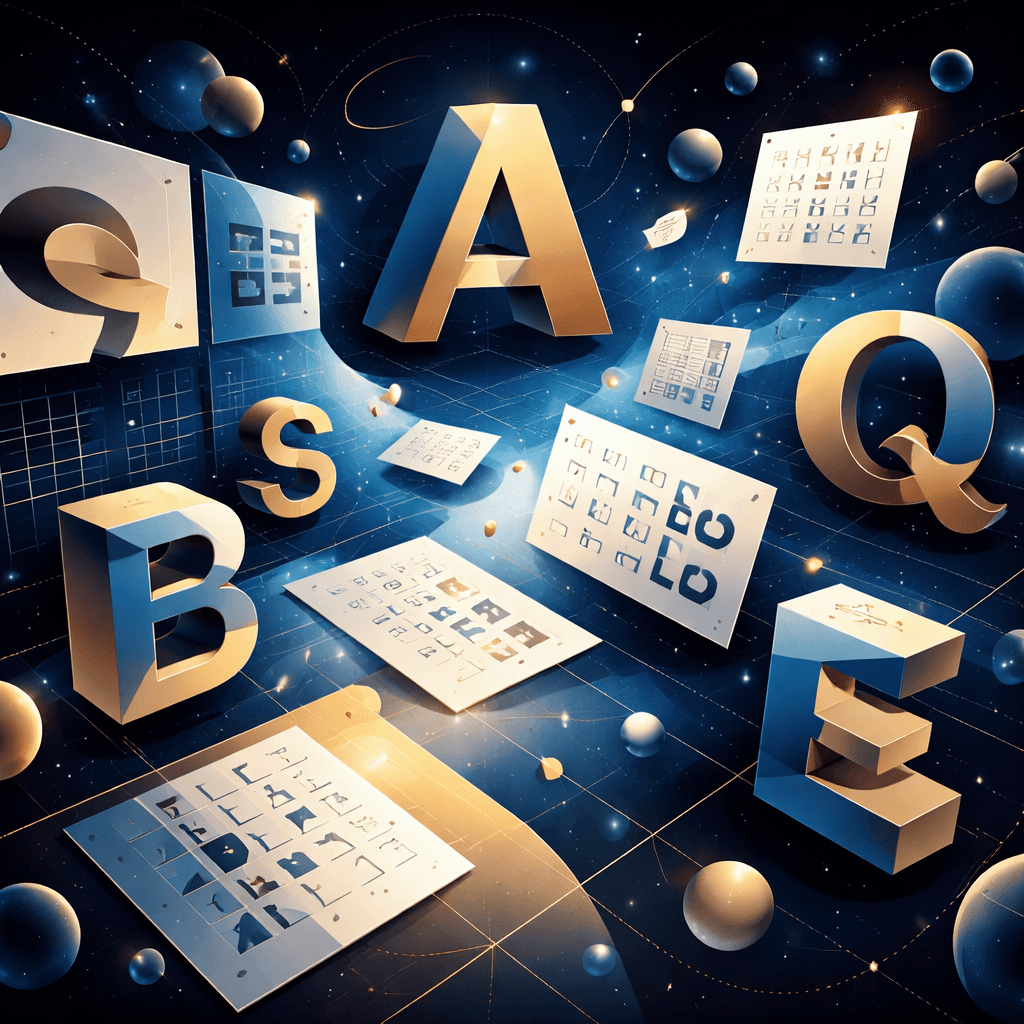
We often talk about the colors, the symbol, the shape of a logo. Typography is sometimes treated as a detail — a last-minute decision. This is a mistake. The font you choose is often the first message you send to your customers.
Take two identical words — “Studio” — and write them in elegant Garamond, then in bold Impact. You get two radically different companies. Same name, same color, same size: typography alone creates two universes, two promises, two different targets.
This is the power of typography. It communicates before the brain has read the word. In just a few milliseconds, it says whether you are luxurious or accessible, traditional or avant-garde, serious or playful. It's a non-verbal language that you need to master the basics of to create a logo that really works.
In this guide, we will explore the four main families of fonts, how to combine them, the 2026 trends, and the classic mistakes that cause a logo to fail. Whether you work with a graphic designer or use a tool like Wilogo, this knowledge will help you make the right choices.
The 4 big font families
In typography, there are traditionally four main families of fonts. Each has its own personality, history, and use cases. Before choosing your logo font, you need to understand these families.
Note: in practice, typographers use finer classifications (humanist, geometric, transitional, etc.). For this guide, we will stick to the four main categories which are enough to make informed branding decisions.
Serif fonts: tradition, elegance and authority
Serif (or serif) fonts are characterized by these small horizontal lines at the ends of the letters — the “serifs”. These are the oldest font families: their roots go back to Roman inscriptions on stone, then to Gutenberg's printing press.
What they communicate
Serifs convey tradition, authority, prestige and trust. They have proven longevity — they don't age, they mature. This is why they are widely used in sectors that want to project seriousness, seniority and expertise: law, finance, publishing, luxury fashion.
Some famous examples: the The New York Times (Times New Roman) logo, the Tiffany & Co., or many banks and law firms. In fashion, Vogue, Harper's Bazaar and Dior all use serifs to project elegance and timelessness.
Main subcategories
- Humanist serif (Garamond, Caslon): the softest and organic, inspired by Renaissance calligraphy. Perfect for artisan brands, publishing, creatives.
- Transitional serif (Times New Roman, Baskerville): the balance between tradition and clarity. Highly readable, ideal for established institutions and businesses.
- Modern serif/didone (Didot, Bodoni): strong contrasts between thin and thick, very elegant. The signature of luxury, haute couture, high-end beauty.
- Slab serif (Rockwell, Clarendon): thick, angular serifs. Project robustness, reliability, craftsmanship. Popular in the food sector, industry, sport.
Sans-serif: modernity, clarity and versatility
Sans-serif fonts emerged in the 19th century, but it was the Bauhaus movement in the 1920s that gave them their nobility. The principle: get rid of all superfluous ornament to keep only the essentials. A complete design philosophy summarized in a typographic category.
What they communicate
Sans-serifs project modernity, clarity, accessibility and contemporary professionalism. They are also the most readable on screen, which explains their domination in digital. The tech giants — Google, Facebook, Spotify, Airbnb — have almost all migrated to sans-serifs over the years.
Main subcategories
- Grotesque (Helvetica, Arial): the original, neutral and universal sans-serif. Helvetica is probably the most widely used font in the world — it can be found on New York subway signs, the American Airlines logo, and thousands of global brands.
- Geometric (Futura, Avenir, Montserrat): based on pure geometric shapes (circle, square, triangle). They communicate precision, innovation, idealism. Futura is the font for the IKEA and Volkswagen logos.
- Humanist (Gill Sans, Myriad, Frutiger): sans-serif with an organic touch inspired by calligraphy. Warmer than grotesques, ideal for brands that want to combine modernity and accessibility.
- Neo-grotesque (Inter, DM Sans, Plus Jakarta Sans): contemporary web favorites, designed natively for the screen. Perfect for startups and digital brands.
Scripts: personality, warmth and authenticity
script fonts imitate handwriting — whether formal calligraphy with elaborate curves or informal handwriting, almost like scribbled in a notebook.
What they communicate
Scripts convey authenticity, personality, warmth and creativity. They humanize a brand, give it a face. In sectors such as hairdressing, baking, natural cosmetics or independent designers, they are very popular because they create an immediate emotional connection. For a concrete example, our hairdresser logo guide shows how scripts work in this industry.
Use precautions
Scripts require particular vigilance on two points: readability (certain handwritten fonts are illegible in small format) and variation (they can be difficult to read in black and white or on certain backgrounds). Always test a script font at 2 cm wide before validating.
Another tip: scripts should be used sparingly in a logo. A good practice is to associate them with a more sober sans-serif for secondary information (activity, slogan, etc.).
Display fonts: impact, originality, character
The display (or “title”) category includes all fonts designed to be viewed large — not for reading long text. They include decorative fonts, ornate letters, extreme geometric fonts, retro or experimental characters.
What they communicate
Display fonts project originality, boldness, memorability. They are the right choice when your brand wants to stand out, surprise, and is not afraid to take risks. They work particularly well for creative, cultural, fashion, music and arts brands.
Use precautions
A poorly chosen display font can appear cheap or illegible. The rule: only one display font per logo, and always check that it remains readable at all sizes. These fonts also age faster than traditional ones — which can be an advantage (if your brand refreshes regularly) or a disadvantage (if you're looking for a lasting identity).
How to combine two fonts in a logo?
In many logos, there are two fonts combined: usually one for the brand name, and another for the slogan or business descriptor. It's a powerful technique that creates contrast and visual hierarchy — but it requires mastery.
The principle of contrast
The typographic association succeeds on the contrast. You don't mix two similar fonts (two slightly different serifs, for example) — it creates confusion without harmony. We choose two fonts clearly different but complementary.
Classic combinations that work:
- Serif + sans-serif: the most widespread association. The serif brings tradition and character, the sans-serif brings readability and modernity. Ex: name in Didot, activity in Futura Light.
- Script + sans-serif: very popular in the craft sectors, beauty, hairdressing. The personalized script, the sans-serif structure. Ex: name in handwriting, description in Montserrat.
- Slab serif + fine sans-serif: the slab gives weight and anchoring, the fine sans-serif brings lightness. Good for brands that want to combine robustness and elegance.
The golden rules
Some principles to keep in mind when making a typographic association:
- Maximum 2 fonts in a logo — beyond that, it’s chaos.
- Create a clear hierarchy: a dominant font for the name, a secondary font for additional information.
- Do not mix fonts from the same family without reason: two sans-serifs together blur the message.
- Test the combination on a white background AND on a dark background: certain associations that work on white become unreadable on a colored background.
If this all seems complicated, remember that Wilogo AI agents manage these typographic associations for you, offering proven combinations tailored to your industry.
Which font for which sector?
There is no absolute rule, but certain sectors have strong typographic conventions. Knowing them helps you position yourself — or consciously stand out from them.
Finance, law, insurance
Classic serif (Garamond, Baskerville) or sober sans-serif (Helvetica, Inter). The objective: project confidence, seriousness, stability. Avoid scripts and displays that would appear casual in these contexts.
Tech, startups, SaaS
Almost exclusively geometric or neo-grotesque sans-serif. Inter, DM Sans, Plus Jakarta Sans… These fonts are designed for the web, readable on all screens, and convey modernity and efficiency. For a self-entrepreneur logo in digital, this is often the right choice.
Luxury, fashion, jewelry
Modern serif with strong contrast (Didot, Bodoni) or very fine and spaced sans-serif. The white space around the letters communicates as much as the font itself in this area. Character spacing (tracking) is often increased to create a feeling of exclusivity.
Crafts, food, baking
Slab serif for robust artisan brands, or script for brands that want to communicate warmth and authenticity. Retro/vintage fonts work well in this sector, as long as you treat them carefully so as not to appear dated.
Health, well-being, organic
Humanist sans-serif (soft, organic) or fine script. The objective is to reassure and create proximity. Fonts that are too rigid or too corporate can create distance with a target looking for authenticity and naturalness.
Childhood, family, games
Round, sans-serif fonts with soft curves, or playful displays. Right angles and overly formal fonts should be avoided. The objective: to transmit joy, accessibility, kindness.
Typographic trends 2026
Typography evolves with the times. In 2026, several trends will mark the world of branding. Use wisely — a trend does not replace a strategic choice adapted to your brand.
The renaissance of expressive serifs
After years of sans-serif domination in digital, serifs are making a comeback — but in more expressive, sometimes almost sculpted, versions. The new 2026 serifs play on extreme contrasts, unexpected curves, an elegance that is no longer wise. They bring character and memorability to visual identities that want to distinguish themselves from ambient minimalism.
Sensitive handwriting
The scripts evolve into something more personal, more imperfect, almost like notes scribbled in a notebook. This trend of “intentional imperfection” is a reaction to digital perfectionism — a way of signaling humanity and authenticity in an increasingly automated world. Particularly relevant for artisanal and creative brands.
The silent sans-serif
In contrast, many brands choose ultra-clean, almost invisible sans-serifs — what designers call “quiet branding.” The typography fades, the idea remains. This is the trend of luxury and premium tech brands that trust in the strength of their name alone.
Variable and adaptive typography
Variable fonts (a single file that contains all the styles) allow logos to adapt dynamically — bolder on mobile, thinner in large format. For digital brands, this is an important technical and aesthetic evolution.
Typographical errors to absolutely avoid
Certain typographical errors systematically recur in amateur or poorly designed logos. Here they are, with their antidote.
Use system fonts without thinking
Arial, Times New Roman, Comic Sans — these fonts are on every computer, which means they're in thousands of other logos too. They lack distinctive character and struggle to create a memorable identity. If you're on a budget, Google Fonts offers hundreds of quality, free and royalty-free fonts that are infinitely better than system fonts.
Too much ornamentation
An overly decorated font may look good on screen, but becomes a nightmare at any other size. Excessive ligatures, complex ornaments, multi-looped letters — all of these disappear or blend together as soon as the logo is reduced. As we explain in our guide on the 10 logo mistakes to avoid, readability in small format is an imperative criterion.
Default spacing
Tracking (spacing between letters) and kerning (space between two specific letters) make a huge difference in the perceived quality of a logo. Slightly augmented tracking can transform an ordinary font into something elegant. Poorly fitted kerning between an adjacent “A” and “V” can create an unsightly gap. These finishing details are what separates an amateur logo from a professional logo.
Make everything uppercase…or lowercase
Exclusive capitals project authority and strength — but can also appear aggressive or difficult to read. Exclusive lowercase communicates accessibility and modernity — but can lack presence. Mixed case (first letter of each word capitalized) is often the best option in terms of readability. Choose according to your positioning, not by habit.
Choose a font without checking rights
Not all fonts are royalty free for commercial use. Some beautiful fonts available on free download sites are actually subject to commercial licensing. Before using a font in your logo, check its terms of use. For commercial use, choose fonts with the SIL Open Font License (OFL) or purchase a commercial license.
FAQ — Logo typography
What is the best font for a professional logo?
There is no one-size-fits-all “best font” — it depends entirely on your industry, positioning and target audience. For a consulting firm: a sober sans-serif (Inter, Helvetica). For an artisanal bakery: a slab serif or a readable script. For a tech startup: a neo-grotesque. The important thing is that the font is consistent with what you want to communicate.
Can I use a Google Fonts font for my logo?
Yes, most Google Fonts are distributed under the SIL Open Font License (OFL), which allows commercial use including in a logo. However, check the specific conditions of each font on the Google Fonts page. Among the Google fonts recommended for logos: Montserrat, Raleway, Playfair Display, Lato, Nunito, DM Sans.
How many fonts in a logo?
Maximum two. A single font (well chosen) is often the most elegant solution — this is the case for the vast majority of logos of recognized brands. If you use two fonts, make sure they create clear contrast and a readable visual hierarchy. Beyond two, it's almost always an error.
Can we use an italic font in a logo?
Yes, italics can bring dynamism, elegance or speed depending on the font chosen. However, an italic font is less readable than a small, straight version. If you use italics, test your logo at all sizes. Italics work better for slogans than brand names.
Serif or sans-serif: what to choose?
The serif if you want to project tradition, prestige, authority or craftsmanship. Sans-serif if you are aiming for modernity, clarity, accessibility or tech. Both work in most industries — your positioning should guide the choice, not a hard and fast rule. Some of the most modern brands use serifs (Vogue, Tiffany), and some of the most classic use sans-serifs (Chanel recent logo, Burberry).
How do I know if my typography works for my logo?
Apply these four tests: (1) Reduce your logo to 2 cm — is it still readable? (2) Switch it to black and white — does it work without color? (3) Ask 5 people from your target group what the logo evokes in them — is it consistent with your positioning? (4) Wait 24 hours and watch it again — do you still have the same reaction?
Conclusion
The typography of your logo is not a technical detail — it is a strategic decision. It defines the personality of your brand, speaks to your target before they have even read your name, and will carry your identity for years.
Remember the essentials: choose a font consistent with your sector and your positioning, limit yourself to two fonts maximum, always check readability in small formats, and prefer timeless fonts to passing trends.
If you need help making the right typographic choices, the AI designers at Wilogo Studio integrate these principles into each proposal. In a few minutes, you obtain dozens of logos with proven typographic combinations, adapted to your brief.
To deepen your logo culture, also consult our guides on the 10 mistakes to avoid when creating a logo and on visual codes by sector of activity.