The FedEx logo and its hidden arrow: the genius of negative space
How Lindon Leader hid an arrow between the E and x of the FedEx logo in 1994: history of creation, negative space technique, and design lessons for your own logo.
A logo that the whole world looks at without really seeing
You've probably seen the FedEx logo thousands of times. On a truck on the street, on a package delivered to your home, on a plane at the airport. And yet, there's a good chance you've never noticed its hidden arrow.
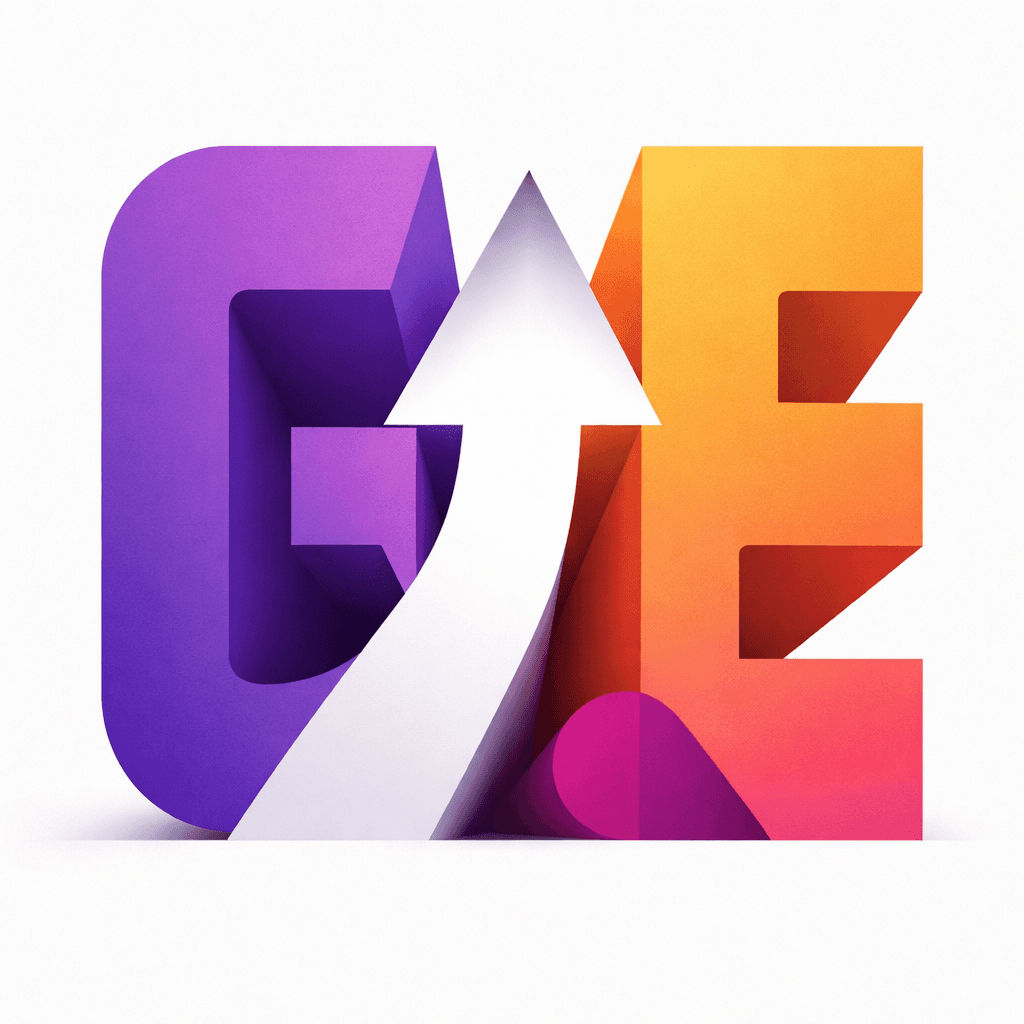
Look carefully at the space between the capital E and the lowercase x. Do you see it? A white arrow, pointing to the right, formed not by a drawn line, but by the empty space between the two letters. This is what we call in design negative space — the space around and between the shapes in a design.
This invisible arrow has become one of the most studied examples in design schools around the world. It has won more than 40 design awards and was named one of the eight best logos of the last 35 years by Rolling Stone magazine in 2003. And the most fascinating thing is that it wasn't originally planned.
From Federal Express to FedEx: a shortcut that has become a brand
The story begins in 1971, when Frederick W. Smith founded Federal Express Corporation in Arkansas, United States. His idea, which he had outlined in a university dissertation: create an express air delivery service for urgent packages — medicines, computer parts, electronic components. At the time, no similar service existed.
The company is experiencing dazzling success. In 1983, Federal Express reached $1 billion in turnover, a first in history for an American company without an external acquisition. In the years that followed, the company expanded into Asia-Pacific and Europe.
But competition is intensifying. UPS, DHL and others are copying the express delivery model. The market that Federal Express invented is becoming a commoditized sector, where customers choose above all on price.
Management understands that it is necessary to reposition the brand. And one observation stands out: in daily life, no one says “Federal Express” anymore. Everyone says “FedEx”. The phrase “I'm going to FedEx this package” has entered everyday American parlance — a rare sign of cultural dominance.
In 1994, the company decided to formalize what the public had already decided: the official name would become FedEx. And to support this change, she calls on Landor Associates, one of the most renowned branding agencies in the world.
Lindon Leader: the designer behind the arrow
The project is entrusted to Lindon Leader, Senior Design Director at Landor Associates, in the San Francisco offices. A graduate of the ArtCenter College of Design in Pasadena (California), Leader is a methodical designer, passionate about typography and — crucially for our story — fascinated by the possibilities of negative space.
Negative space is the “empty” space around and between the elements of a composition. In design, good use of negative space can create double readings: a visual element hidden in the void, perceptible only when you pay attention to it. Leader knew this principle by heart. But what he would achieve with the FedEx logo would surpass anything he had done before.
The objectives of the brief were clear: the new logo had to communicate the fundamental attributes of the brand — accuracy, service, speed and reliability. It also had to be easy to apply on a huge fleet: thousands of trucks, hundreds of planes, millions of packages.
Creation: hundreds of attempts and a flash of genius
Leader and his team start by exploring hundreds of avenues. The color palette is already defined — purple and orange, the company's historic colors. The work focuses on the typography and shape of the word “FedEx”.
Dozens of typographies are tested, hundreds of models are produced. And then, in the middle of this process, Leader has his eureka moment: he notices that in certain letter combinations, the space between the E and the x naturally forms an arrow.
The idea is brilliant, but the execution is a nightmare. The first attempts were, in Leader's own words, “clumsy and disharmonious”. The problem: No existing typeface produces a clean, natural arrow between these two letters. The shape is either too visible (which destroys the element of surprise) or too shaky (which makes the logo inelegant).
The solution comes from a bold approach: merging two fonts. Leader takes the most interesting features of two classic sans-serifs — Univers 67 (Bold Condensed) and Futura Bold — and combines them to create a bespoke typography, a font that doesn't exist anywhere else.
By adjusting the spacing between letters (kerning), increasing the size of lowercase letters compared to uppercase letters, and playing with the proportions of each character, Leader manages to create an arrow that seems perfectly natural — as if it had always been there, waiting to be discovered.
In total, the team will have produced more than 200 variations before arriving at the final result. The arrow was not drawn and then inserted. It emerged from the patient and obsessive adjustment of typography.
Negative space: what it is and why it works
Negative space (or “negative space”, “white space”) refers to the empty areas of a visual composition — the space around, between and inside graphic elements. Unlike positive space (the shapes themselves), negative space is what the brain unconsciously “fills in.”
In logo design, the use of negative space is considered one of the most elegant techniques. For what ? Because it creates a double level of reading:
- First level: the name of the brand, readable and immediate
- Second level: a hidden form, discovered by the attentive observer
This double reading has a powerful psychological effect. When someone discovers the hidden arrow in the FedEx logo — often after years of seeing it without noticing it — it creates a feeling of surprise and delight. This “moment of revelation” strengthens the emotional connection with the brand. We remember the logo. We talk about it to our friends. It’s word of mouth integrated into the design.
Other famous logos use negative space brilliantly:
- The WWF panda, whose silhouette is formed by black spots
- The Carrefour logo, where a C appears between the two red and blue arrows
- The NBC logo, whose peacock feathers outline a bird profile
But the FedEx logo remains the absolute reference on the subject, because the arrow is both perfectly integrated and rich in meaning: it symbolizes speed, direction, progress — everything that an express delivery service promises.
The typographic anatomy of the FedEx logo
What makes the FedEx logo technically remarkable is the surgical precision of its typography. Let’s break it down:
The merger of two fonts
As mentioned, the logo does not use any existing fonts. This is a custom logotype (or “custom wordmark”) which borrows characteristics from Univers 67 and Futura Bold. Univers brings its rigor and readability. Futura brings its geometric shapes and clean endings. The mixture of the two creates something new.
The upper/lower case ratio
In the FedEx logo, the lowercase letters "e", "d" and "x" are proportionally larger than in standard fonts. This choice reduces the height difference between the uppercase “F” and the lowercase letters, creating a more compact and more readable visual block from a distance — essential for a logo that must be read on a truck traveling at 90 km/h.
Kerning (spacing)
The spacing between letters is tighter than normal. This is not an arbitrary aesthetic choice: it is the necessary condition for the arrow between the E and the x to form correctly. A wider space would destroy the effect. A narrower space would make the letters illegible.
The “break” between Fed and Ex
The color change (purple for “Fed”, orange for “Ex”) fulfills several functions: it maintains the link with the full name “Federal Express”, it creates visual dynamism, and above all it subtly draws attention to the area where the arrow is located.
The color system: one code per profession
One of the smartest innovations of the FedEx rebranding is its division color system. The first part of the logo (“Fed”) always remains dark purple. The second part (“Ex”) changes color depending on the branch of the company:
- Orange — FedEx Express (express delivery, the historic division)
- Green — FedEx Ground (ground delivery)
- Red — FedEx Freight (heavy freight)
- Blue — FedEx Office (printing and shipping services)
- Yellow — FedEx Trade Networks (international trade)
- Grey — FedEx Corporate (headquarters and support functions)
This system is great for several reasons. First, it allows you to instantly identify the division in question — useful when you see a FedEx truck on the street. Then, it maintains perfect visual coherence: the purple “Fed” is the common anchor, while the color of the “Ex” provides differentiation. Finally, the hidden arrow works in all color combinations, proving the robustness of the design.
To delve deeper into the topic of strategic use of colors in a logo, check out our guide to color psychology.
More than 40 awards and worldwide recognition
The FedEx logo, unveiled in April 1994, did not take long to be recognized by the profession. It has won more than 40 design awards around the world, a record for a logo.
In 2003, Rolling Stone magazine, in its special 35th anniversary issue, ranked it among the eight best logos of the last 35 years. It is regularly cited in the top 10 smartest logos in the world, alongside giants like Nike, Apple and Coca-Cola.
What is remarkable is that this recognition has never wavered. More than thirty years after its creation, the FedEx logo is still in use, virtually unchanged. In a world where brands rebuild their identities every five years, this longevity is exceptional.
The hidden arrow also became a viral phenomenon before its time. Long before social media, people passed on the “revelation” of the arrow as a secret to share. Even today, social media posts showing the FedEx arrow garner thousands of likes and shares — with invariably the same comment:“How could I not have seen that before?!” »
FedEx logo design lessons
The FedEx logo is a textbook case that holds valuable lessons for anyone creating a logo or visual identity.
1. Emptiness is as important as full
Most people think that a logo is what you draw. The FedEx logo proves that it's also what you don't draw. The space around and between elements is not a void to be filled — it is a design tool in its own right. If you're creating a logo, ask yourself what the empty spaces communicate.
2. Subtlety beats demonstration
The FedEx arrow works precisely because it is not obvious. If it had been highlighted with a different color or outline, it would have lost all its power. It is the fact of discovering oneself that creates attachment. In branding, the most powerful messages are often those that the audience feels they can find for themselves.
3. Typography is an art, not a drop-down menu choice
Lindon Leader did not “pick a font”. He created a font, merging the best features of two existing typographic families. Every curve, every space, every proportion has been adjusted manually to serve the final result. It’s a reminder that the typography in a logo deserves tailor-made creative work.
4. The process matters as much as the result
More than 200 variations were necessary to arrive at the final logo. This is not an anecdotal figure — it is the reality of professional design. A good logo doesn't come out of the first draft. It emerges from a process of exploration, testing and refinement that requires time and perseverance.
5. A flexible system is better than a fixed logo
The color system by division (fixed purple + variable color) is a model of flexibility in consistency. It allows a multinational with dozens of branches to have a unified identity while being differentiated. For any business planning to grow, thinking of your logo as a system rather than a single design is a wise investment.
If you want to think more deeply about your own visual identity, we have published a complete guide on the graphic charter: what it is and how to create it.
FAQ
Who created the FedEx logo?
The FedEx logo was created by Lindon Leader, Senior Design Director at Landor Associates, in 1994. Leader is a graduate of ArtCenter College of Design in Pasadena, California. He then founded his own agency, LeaderCreative.
How does the hidden arrow in the FedEx logo work?
The arrow is formed by the negative space — the gap between the capital E and the lowercase x. It is not a drawn element strictly speaking: it is the shape that appears naturally when these two letters are brought together with the right spacing and the right typography.
Was the arrow planned from the start?
No. Lindon Leader discovered the possibility of the arrow after exploring hundreds of models. It was by observing the space between the E and the x in certain typographic combinations that he had his “eureka moment”. He then spent weeks perfecting the typography so that the arrow would appear naturally.
Why don't most people see the FedEx arrow?
This is a psychological phenomenon called inattentional blindness. Our brain treats the logo as a word to read, not as an image to analyze. It focuses on the text and “ignores” secondary forms. Once you are shown the arrow, however, you can no longer unsee it — it is irreversible.
How many awards has the FedEx logo won?
The FedEx logo has won more than 40 design awards around the world. It was named one of the eight best logos of the last 35 years by Rolling Stone magazine in 2003, and is regularly cited as one of the smartest logos in the history of graphic design.
Conclusion
The FedEx logo is the perfect demonstration that a great logo is not necessarily spectacular at first glance. Sometimes, it's in what you don't immediately see that the genius lies. An invisible arrow, nestled in the space between two letters, that tells the whole story of a brand: speed, precision, direction.
If Lindon Leader teaches us one thing, it's that design is not a matter of decoration. It's a matter of meaning — hidden in forms, inscribed in spaces, revealed by attention.
To discover other stories of legendary logos, read our articles on the history of the Nike logo and the history of the Coca-Cola logo. And if you're ready to create a logo that tells your own story, Wilogo provides AI graphic design agents to support you.