The History of the Nike Logo: How a $35 Swoosh Became Iconic
From a sketch by a student paid $35 to the most recognized symbol in global sports: a look back at the fascinating history of Nike's Swoosh.
1. The Origin: Blue Ribbon Sports and Phil Knight
Before becoming Nike, the company was called Blue Ribbon Sports. Founded in 1964 by Phil Knight, a former middle-distance runner at the University of Oregon, and his coach Bill Bowerman, the company imported and distributed Japanese running shoes from the Onitsuka Tiger brand (now ASICS) in the United States.
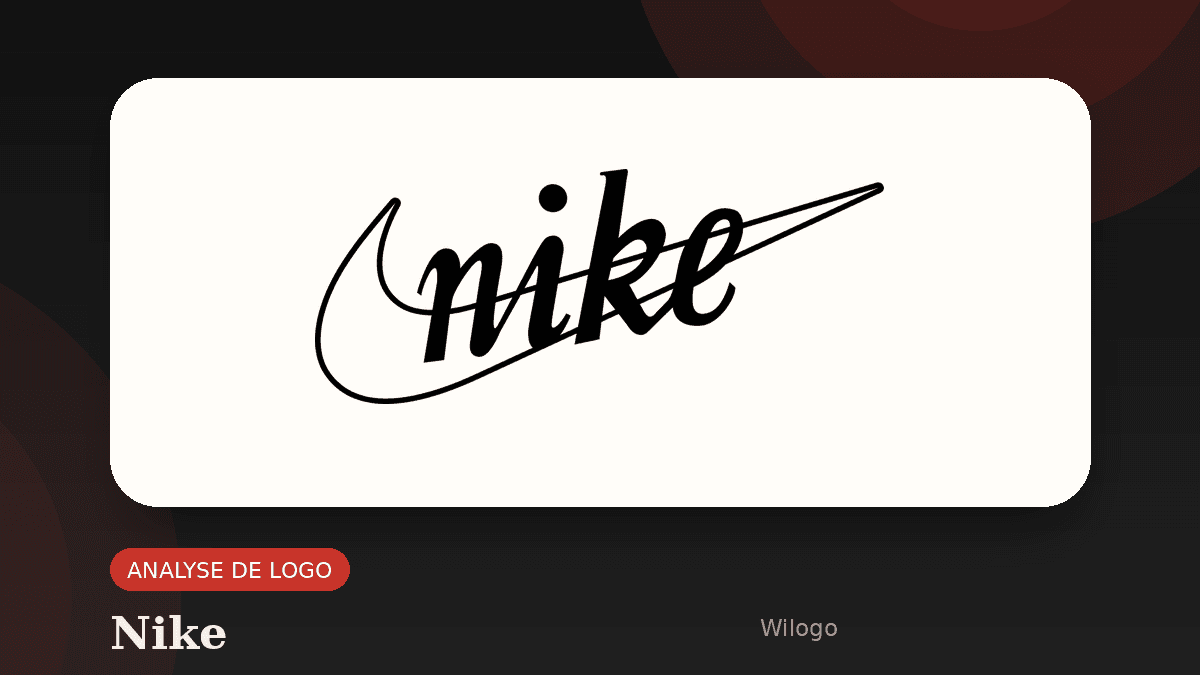
Real Nike logo source
To avoid an invented or approximate visual, this article now uses the real logo artwork from the source below.

Source: Wikimedia Commons
By the late 1960s, Knight and Bowerman decided to launch their own line of shoes. They needed a name, a visual identity — a logo that would embody movement, speed, and victory. It was in this context that Phil Knight, then an assistant professor of accounting at Portland State University, would have a pivotal meeting.
2. Carolyn Davidson, the Student Behind the Swoosh
Carolyn Davidson was a graphic design student at Portland State University in the early 1970s. She met Phil Knight in the university hallways — he was looking for someone to create graphics for his classes and side projects.
Knight initially assigned her small tasks: charts, illustrations for presentations. The collaboration worked well. When Blue Ribbon Sports needed a logo for its new shoe brand, Knight naturally turned to Davidson.
The brief was simple yet demanding: the logo must evoke movement, stand out from Adidas' three stripes (then the market leader), and integrate into the profile of a running shoe. It also needed to have a connection to the name chosen for the brand: Nike, named after the Greek goddess of victory.
3. The Creation of the Swoosh: 17 Hours and $35
Davidson worked on the project for about 17 and a half hours. She presented Knight with five different proposals. Among them was a curved and dynamic shape reminiscent of a wing — a nod to the wings of the goddess Nike.
Phil Knight reviewed the five designs and chose the one that would become the Swoosh. His reaction, which became famous, was far from enthusiastic:
“I don’t like it, but I guess I’ll come to like it.”
— Phil Knight, 1971
For this work, Carolyn Davidson received $35 — the equivalent of about $280 adjusted for inflation in 2026. A modest amount, even for the time, which would become one of the most told anecdotes in design history.
The Swoosh was used for the first time on June 18, 1971, during the launch of the first line of Nike shoes. It was officially registered as a trademark on January 22, 1974.
4. The Meaning of the Swoosh
The word “swoosh” refers to the sound of the wind — that sound you hear when something passes by at high speed. The design itself carries several layers of meaning:
- Movement and speed: the upward curve naturally evokes dynamics, momentum forward. It’s a logo that “runs”.
- Nike's wings: in Greek mythology, Nike is the goddess of victory, often depicted with wings. The shape of the Swoosh resembles a stylized wing.
- A checkmark: seen from a certain angle, the Swoosh looks like a validation mark — a “yes”, a “go”. This subconscious reading reinforces the brand's positive message.
- Simplicity: a single curve, a single line. No frills, no unnecessary details. The Swoosh is proof that a logo doesn’t need to be complex to be memorable.
5. The Evolution of the Nike Logo from 1971 to Today
Unlike many brands that have radically changed their visual identity over the decades, Nike has never fundamentally altered the Swoosh. The adjustments have been subtle and strategic:
1971-1978: The Original Swoosh
The first logo combines the Swoosh with the word “nike” written in lowercase, in an italic typeface. The company was still called Blue Ribbon Sports until 1978, when it officially adopted the name Nike, Inc.
1978-1995: The Swoosh and NIKE in Futura Bold
The logo evolves: the word “NIKE” appears in uppercase, in the Futura Bold font, placed above or next to the Swoosh. This version establishes the bold typography that will become inseparable from the brand.
1995-Today: The Swoosh Alone
This is a major turning point. Nike makes the bold decision to remove the text and keep only the Swoosh. Very few brands in the world can afford to be identified by a single symbol, without any words. Nike joins this exclusive club alongside Apple and Mercedes-Benz.
This evolution illustrates a fundamental principle of branding: a great logo gains power when elements are removed, not when they are added. The Swoosh alone has become so recognizable that it no longer needs explanation.
6. The Late Recognition of Carolyn Davidson
The story of Carolyn Davidson doesn’t end with her $35. Over the years, the Swoosh has become one of the most powerful symbols of global capitalism. Nike, aware of the debt it owes to its creator, would eventually recognize her appropriately.
In September 1983, during a lunch, Phil Knight offered Davidson:
- Swoosh-shaped chocolates
- A diamond and gold ring engraved with the Swoosh
- 500 Nike shares, worth about $85 each at the time
With subsequent stock splits, these initial 500 shares are now estimated to be worth several million dollars. Davidson, who continued to work part-time for Nike until 2000, retired knowing that her work as a student was ultimately recognized — and generously rewarded.
Her story has become a case study in design training: a reminder that the value of a logo is not measured by the number of billed hours, but by the impact it generates over time.
7. What the Swoosh Teaches Us About Logo Design
The history of the Nike logo is rich with lessons for anyone looking to create or commission a logo:
Simplicity is a Strength
The Swoosh is an elemental shape — a single curve. Yet, it is immediately recognizable worldwide. A good logo doesn’t need to be complex. It must be distinctive, memorable, and reproducible at all sizes.
A Logo Grows with the Brand
The Swoosh of 1971 was nothing exceptional in itself. It was Nike that made it iconic — through its products, athletes, and campaigns (“Just Do It”, launched in 1988). A logo is an empty container that the brand fills with meaning over time.
Evolution Rather Than Revolution
Nike has never thrown everything away to start from scratch. Each evolution of the logo has been a refinement, not a replacement. This is an important lesson: evolving your visual identity does not mean destroying it. Also discover why minimalism works so well in branding.
The Brief Matters as Much as Talent
Phil Knight gave Davidson a clear brief: movement, differentiation from Adidas, integration into the profile of a shoe. This framework allowed creativity to express itself in the right direction.
The Value of a Logo Reveals Itself Over Time
At its creation, the Swoosh was worth $35. Today, the Nike brand is worth over $30 billion. The lesson? Never judge a logo solely on its first impression. Give it time to settle in and prove its worth.
You can also read our article on the history of the McDonald's logo and the logos of the Olympic Games for more stories of iconic logos.
Want to Create Your Own Iconic Logo?
As Carolyn Davidson proved, a memorable logo can arise from a simple idea and a good brief. At Wilogo, our graphic designers transform your vision into visual identity — starting from €0.
FAQ — The History of the Nike Logo
Who Created the Nike Logo?
The Nike logo (the Swoosh) was created in 1971 by Carolyn Davidson, a graphic design student at Portland State University (Oregon, USA). She was hired by Phil Knight, co-founder of Nike.
How Much Did the Nike Logo Cost?
Carolyn Davidson was paid $35 for creating the Swoosh in 1971. This amount is equivalent to about $280 in current value. Nike later thanked her in 1983 with a diamond ring and 500 shares of the company.
What Does the Nike Swoosh Mean?
The Swoosh evokes movement and speed. Its shape is inspired by the wing of Nike, the Greek goddess of victory. The word “swoosh” itself refers to the sound of the wind during a fast passage.
Why Did Nike Remove the Text from Its Logo?
In 1995, Nike removed the word “NIKE” from its logo, keeping only the Swoosh. This choice reflects the exceptional notoriety of the brand: the symbol has become so recognizable that it no longer needs to be accompanied by text to be identified.
Has the Nike Logo Changed Since 1971?
The Swoosh itself has never been fundamentally redesigned. The evolutions have involved adding and then removing the text “NIKE” and adjustments to proportions. The basic shape created by Carolyn Davidson has remained true to the original for over 50 years.