New OM logo in 2026: deciphering a historic rebranding
Olympique de Marseille unveiled its new logo on April 8, 2026, the first change in visual identity since 2004. Complete analysis of the design, strategy and challenges of this rebranding.
A rebranding awaited for 22 years
On April 8, 2026, Olympique de Marseille officially unveiled its new visual identity during an event organized by the Treizième Homme foundation. This is the club's first logo change since 2004 - 22 years with the same emblem.
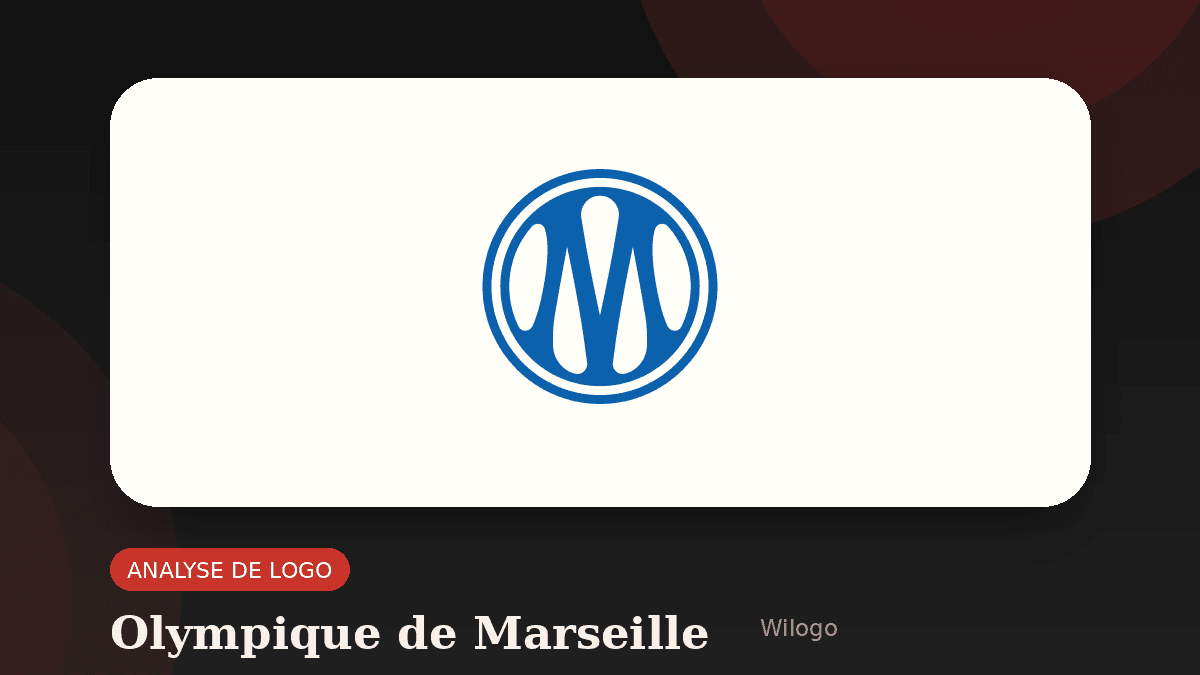
Real Olympique de Marseille logo source
To avoid an invented or approximate visual, this article now uses the real logo artwork from the source below.

Source: OM.fr
In modern football where clubs are increasing digital activations, international merchandising and presence on social networks, OM judged that its visual identity had to evolve. President Pablo Longoria had hinted for several months that the club was working on this overhaul.
This rebranding is much more than a simple aesthetic change: it is part of a global strategy to modernize the OM brand, while reclaiming its Mediterranean and popular roots.
The 2004 logo: strengths and limits
Unveiled on February 17, 2004 under the presidency of Christophe Bouchet, the outgoing logo marked a break with the more ornate coats of arms of previous decades. Its clean design – a merged “O” and “M”, topped with the 1993 Champions League star – offered good readability.
However, two decades later, this logo showed its limits:
- Reduced readability in small format — on smartphone screens and social media thumbnails, details were lost.
- Dated typography — the motto “Right to the Goal” used a font that lacked character, according to several design analysts.
- Limited adaptability — the logo was difficult to translate into a monochrome or animated version for modern digital media.
These observations are classic in the world of rebranding in 2026: a logo can be excellent in its original context and become obsolete when the media evolve.
The new coat of arms decrypted
The new OM emblem adopts a rounded and refined shape. Here are the key elements:
- The redesigned central “M” — described by the club as “freer”, it symbolizes “the liveliness of the water, the freedom of the wind and the fire that burns in the heart of Marseille”. The lines are more fluid, less geometric than in the 2004 version.
- The preserved star — symbol of the historic victory in the Champions League on May 26, 1993 against AC Milan (1-0), it remains at the top of the coat of arms. A logical choice: this star is the DNA of the club.
- The motto “Straight to the goal” maintained — the historic motto of the club, present since its origins in 1899, retains its place.
- Historical references — the design is deliberately inspired by the crest worn by the club between 1935 and 1972, in an approach assumed to be nostalgic.
The whole thing is more readable on digital media while retaining the symbolic richness that supporters expect from a football crest.
Colors and typography: “Marseille Blue”
Beyond drawing, OM has redesigned its entire visual system:
The “Marseille Blue”
The club has defined a signature blue called “Marseille Blue”, inspired by the Mediterranean, the Provençal sky and the club's chromatic heritage. This is not trivial: in branding, precisely coding your color (like Ferrari red or Tiffany blue) helps strengthen brand recognition. To learn more about the importance of color choice, check out our guide to color psychology in logos.
Expanded palette
White remains omnipresent, and gold accents provide what the club describes as a “subtle touch of prestige” — a likely nod to the gold introduced in 1999 for the centenary.
Typography “OM Marseille”
The club has developed a tailor-made font called “OM Marseille”. Geometric and readable, it is designed to work as well on jerseys as on mobile applications, social networks and institutional communication. Creating dedicated typography has become a standard for major sports brands — an investment that reinforces visual consistency across all touchpoints.
A committed digital strategy
OM makes no secret of it: this overhaul is “the result of internal reflection” to respond to the challenges of “marketing and digital”. The new identity system is designed to:
- Social networks — thumbnail readability (profile photo, stories, notifications)
- Merchandising — simplified variations for derivative products
- Partnerships — facilitated co-branding with sponsors and activations
- Stadium screens — animations and dynamic displays
It's a challenge that all companies share today: a logo must work everywhere, from the business card to the billboard to the favicon of a website. If you're on this journey for your own brand, that's exactly what a well-thought-out visual identity should accomplish.
OM and its logos: 127 years of evolution
To appreciate this redesign, a quick look back is necessary:
- 1899 — First emblem created by founder René Dufaure de Montmirail, inspired by his personal seal. The intertwined letters “O” and “M” already appear, with the motto “Straight to the goal”.
- 1930s-1972 — Art Deco period, then developments towards a more solid and symmetrical monogram. The “M” is redesigned in a classic spirit.
- 1986 — The motto “Right to the goal” takes a central place in the badge.
- 1993 — Addition of the golden star after the historic victory in the Champions League against AC Milan, a first for a French club.
- 1999 — Introduction of the golden color for the club's centenary.
- 2004 — Modernized redesign under Christophe Bouchet, refined design which will remain in place for 22 years.
- 2026 — New identity unveiled on April 8, between nostalgia for the years 1935-1972 and the demands of digital.
This timeline illustrates a universal phenomenon in design: a logo evolves with its time, its media and its audience. Each redesign responds to concrete needs, not an aesthetic whim.
A rebranding against the grain?
Interesting fact: while many European clubs (and brands in general) simplify their logos to the extreme – think ultra-minimalist flat designs – OM makes a different choice. Inspired by its coat of arms from the years 1935-1972, the club takes a more ornate, more “noble” approach.
Some observers have also noted a visual resemblance to the Volkswagen emblem, which has fueled discussions on social networks. This is the fate of any high-profile rebranding: it divides, it gets people talking, and this is precisely what makes it effective in terms of visibility.
This tendency towards assumed nostalgia is not isolated. In 2026, we are seeing a “retro-branding” movement where brands draw on their own history rather than reinventing everything. Authenticity trumps disruption.
What entrepreneurs can learn from it
Whether you are a football club or an SME, the rebranding of OM offers several lessons:
- Don't change for the sake of change — OM waited 22 years and a real need (digital, merchandising) before making a move. If your logo works, don't touch it.
- Respect your heritage — The “M”, the star, the motto, the blue: everything that makes up the brand’s DNA has been preserved. A successful rebranding evolves, it does not deny.
- Think multi-support from the start — A logo must work in 16×16 pixels as well as 10 meters wide. This is non-negotiable in 2026.
- Invest in a complete system — Signature color, dedicated typography, variations: a logo alone does not make a brand identity.
- Embrace controversy — Any logo change provokes reactions. This is normal and often beneficial for visibility.
If you are considering creating or redesigning your own visual identity, these principles apply regardless of the size of your business. Create my logo on Wilogo →
Frequently asked questions
When did OM change their logo in 2026?
Olympique de Marseille officially unveiled its new logo on April 8, 2026, during an event of the Treizième Homme foundation. This is the club's first change of visual identity since 2004.
What does the new OM logo represent?
The new crest retains the historical elements – the central “M”, the star of the 1993 Champions League and the motto “Droit au goal” – in a rounded and refined design, inspired by the club crest between 1935 and 1972. It introduces “Marseille Blue” and a bespoke typography called “ OM Marseille”.
Why did OM change its logo?
The club explained that this redesign met the requirements of modern digital marketing: readability on smartphone screens, adaptability for social networks, variations for merchandising and partnerships. The 2004 logo, although recognizable, showed its limits on current digital media.
Who designed the new OM logo?
The club described this redesign as “the result of internal reflection”. At this point, no external design agency has been officially credited with creating the new crest.
How many times has OM changed its logo?
Since its founding in 1899, OM has experienced at least seven major changes to its emblem: 1899, 1930s, 1972, 1986, 1993 (addition of the star), 1999 (centenary), 2004 and 2026. The monogram “OM” and the motto “Right to the goal” have remained constant across all these versions.