Netflix logo: history and evolution of the red N
A complete look at the Netflix logo, from early DVD-era marks to the red N built for mobile screens and global brand recognition.
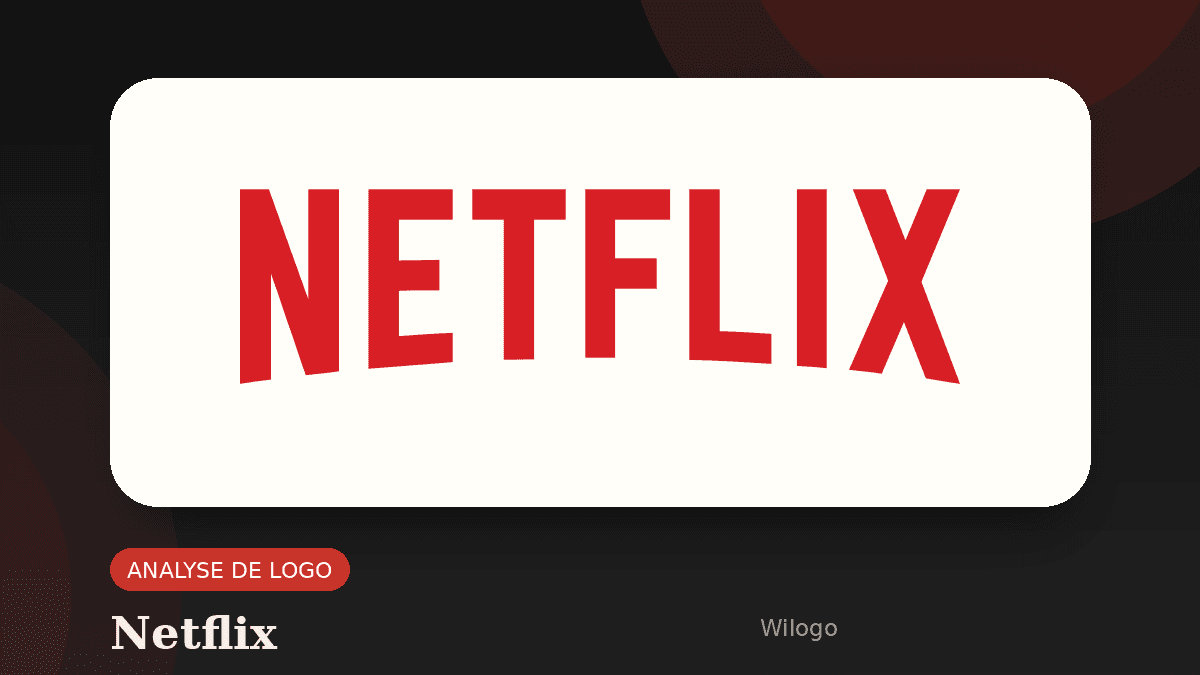
The Netflix logo is one of the rare visual signs that people recognize before they even read the brand name. A dark background, a precise red, a letter that appears to fold like a ribbon: in a few pixels, the identity suggests streaming, entertainment and instant access to a huge catalogue. Yet this apparent simplicity is the result of several brand decisions. Netflix did not begin as a global streaming icon. It started in 1997 as a DVD-by-mail company, then became a streaming platform, a content studio and a worldwide cultural reference.
Real Netflix logo source
To avoid an invented or approximate visual, this article now uses the real logo artwork from the source below.

Source: Wikimedia Commons
From DVDs to streaming
To understand the Netflix logo, it helps to remember the company’s original context. In the late 1990s, Netflix was not a button on a smart TV. It was a service that used the internet to rent DVDs by mail. The name combined Net, for the web, and flix, a casual reference to movies. The first visual identity therefore had to explain the offer quickly: a digital company connected to film culture.
This is common for young companies. When a market does not know you yet, the logo often has to clarify what you do. As awareness grows, the brand can remove explanatory details and rely more on memory. Netflix illustrates this transition very clearly. At first, the sign helps people understand the activity. Later, the sign focuses on recognition. Many famous logos follow the same path.
Red gradually became the central asset. In entertainment, red evokes cinema curtains, posters, urgency and energy. It also performs well on dark interfaces. Netflix’s official brand guidelines specify Netflix Red as HEX E50914 and explain that the N Symbol should always appear in its signature color. Without that color, the symbol may not read as Netflix.
Netflix logo timeline
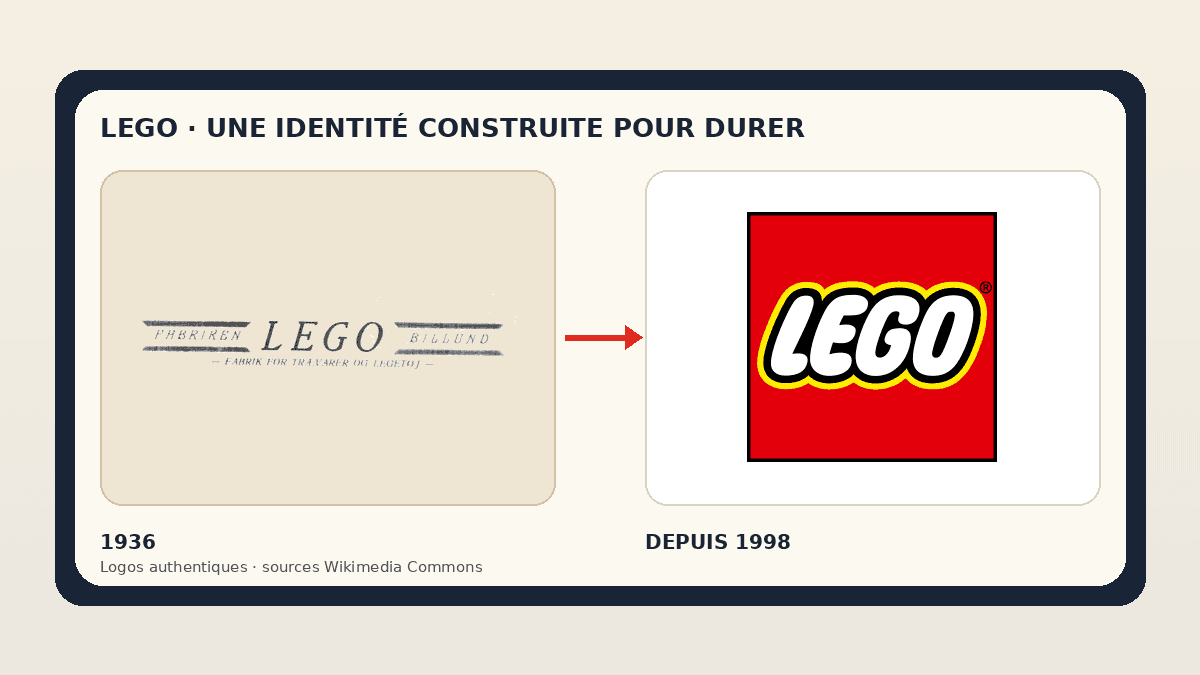
The 1997-2000 period was the discovery phase. The logo put the company name first and used film-related cues. It was a launch identity: it said, in effect, we are about movies, but through the internet. It was not as refined as the current mark, but it played a useful role. Before a company can own a symbol, people must first remember its name.
Between 2000 and 2001, Netflix tested a more compact badge-like identity with darker shapes and details that suggested a screen. This short period is a reminder that branding is an iterative process. Not every version becomes iconic, but each version tests a strategic tone: more technological, more video-oriented, more subscription-based. Strong identities often emerge through successive corrections.
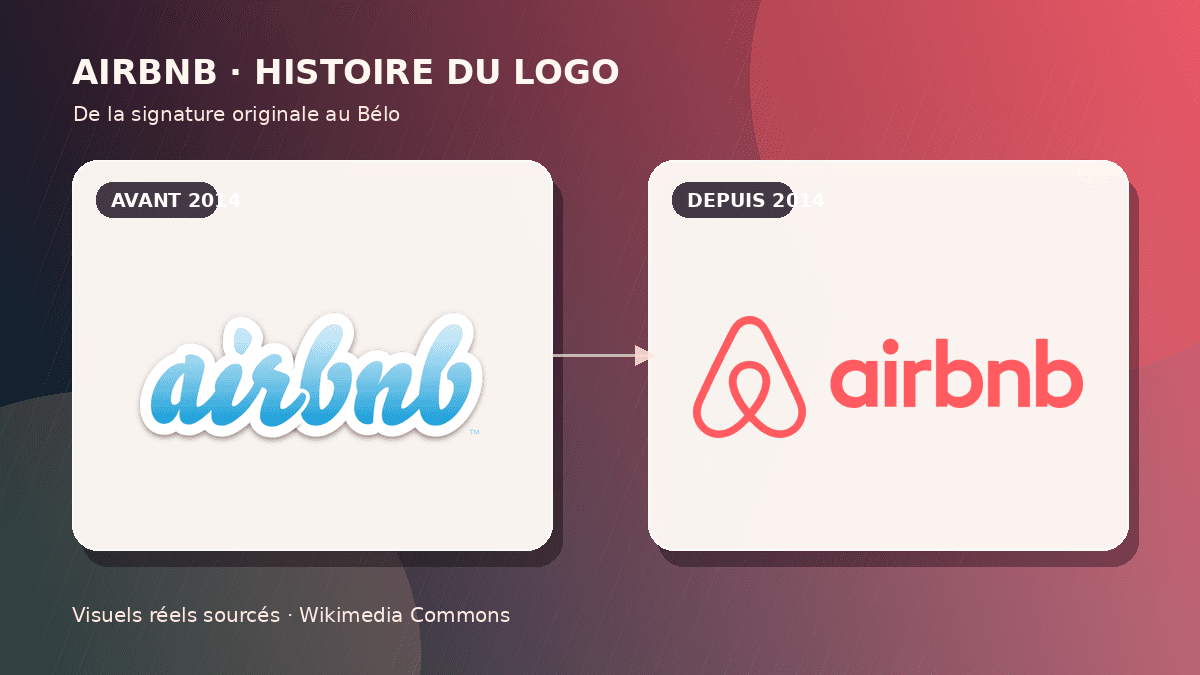
From 2001 to 2014, Netflix used the image that accompanied its rise: a white wordmark on a red background, with a bold, cinematic presence. It was easy to notice on packaging, websites, press material and television screens. This identity bridged two worlds. It still felt connected to movie posters and physical media, yet it prepared the company for the streaming era.
In 2014, Netflix introduced a flatter, cleaner wordmark. Heavy effects were removed, the lettering became more contemporary and the identity gained flexibility. The design studio Gretel, referenced by Logo Design Love, worked on a broader brand system around The Stack: a visual metaphor for an infinite catalogue and personalized selections. The redesign was not only about drawing better letters. It created a language for menus, posters, trailers, campaigns and recommendations.
In June 2016, Netflix introduced the red N symbol. Many people interpreted it as a new logo, but contemporary reports made clear that it was a complementary icon rather than a full replacement for the wordmark. The Netflix wordmark remains valuable when recognition needs to be explicit. The N is built for constrained spaces: mobile app icons, social avatars, favicons and launch screens.
Why the red N works
The red N works because it solves a practical problem: how can a long brand name stay recognizable inside a tiny square? On a smartphone home screen, a long wordmark quickly loses clarity. A single letter can be stronger, but only if it has character. Netflix did not choose a plain N. The symbol looks folded, dimensional and slightly theatrical. It can evoke a ribbon, a curtain, a strip of content or a beam of light.
Color is the second reason. Netflix’s guidelines explain that the N Symbol is used in high-awareness markets because there is power in owning a letter of the alphabet. But this ownership depends on the signature red. Without it, the letter could look like any other monogram. If you want a minimalist icon, make sure another brand asset supports it.
Contrast also matters. Netflix documents readability and clearspace rules instead of leaving usage to chance. A logo that disappears on a busy image feels weak. A logo that stays readable on dark, light or textured backgrounds feels controlled. Even a small business can apply that discipline by testing its logo on real backgrounds, invoices, Instagram avatars, website headers and printed material.
The N is also effective because it does not try to tell the whole story. It does not show a camera, a screen, a film reel or a play button. It has become a cultural shortcut because Netflix built the association through years of product experience, content, interface design, opening sound, marketing and repetition. A logo becomes powerful when the whole experience reinforces the same signal.
A logo system, not just a logo
The strongest lesson from Netflix is that one logo file is not enough. The wordmark, the N, the red, the dark backgrounds, the spacing rules, the motion language and the partnership lockups form a complete system. The official guidelines clearly separate the N Symbol from the Wordmark. The symbol is preferred when people already know the brand; the wordmark remains essential when clarity is needed.
For a smaller brand, the same logic can be simple. You may need a primary horizontal logo, a compact icon, a monochrome version and a few usage rules. A wide wordmark may be perfect on a website but poor as a profile picture. A symbol alone may look elegant but remain unclear if the brand is new. The real goal is to own an identity that works in real situations.
Netflix also shows the value of discipline. Its guidelines prohibit stretching the logo, changing the color, adding effects, using old versions or placing the symbol on backgrounds that damage readability. These rules may look strict, but they protect recognition. The more a brand is exposed, the more small distortions accumulate. Without rules, the logo slowly loses mental sharpness.
At Wilogo, we often make this point in logo projects: creation is not finished when the image looks good. You still have to test usage. Does the logo work small? Does it work in black and white? Does it remain readable on a quote, a website header, a social profile, a sign, a sticker or a thumbnail? Our guide to the mobile-first logo is a useful complement to the Netflix case.
Branding lessons from Netflix
First lesson: simplification is not the same as impoverishment. The red N removes detail, but it adds practical power. Simplicity is successful when it improves recognition, not when it makes a brand generic. Before deleting an element, ask what it contributes. Does it explain the activity, make the brand different, or simply clutter the design?
Second lesson: color can become a strategic asset. Netflix Red is not an approximate red. It is documented, repeated and protected. A small company can define exact color values, test contrast and avoid approximate variations. Our article about logo color trends for 2026 explains how to choose expressive colors without sacrificing readability.
Third lesson: think about formats before approving the logo. The N exists because the word Netflix is not ideal everywhere. Many businesses discover too late that their logo is unreadable as an avatar or too long for a favicon. The solution is not to squeeze the same file into every space, but to design a coherent family of versions.
Fourth lesson: a successful redesign respects brand memory. Netflix did not abandon its name or its red. It modernized the shapes, clarified usage and added a symbol adapted to new media. This is often the right path for a known company: evolve without erasing. Our analysis of the Pepsi logo shows another way to manage the tension between heritage and change.
Fifth lesson: the logo must live with content. Netflix’s system is strong because it supports movies, series, posters, trailers, recommendations and user interfaces. For a smaller company, the equivalent may be consistent photography, a clear editorial tone, illustrations, email design and landing pages. The logo gives the first signal; the full experience confirms the promise.
If you are creating an identity today, start with a clear brief. Who needs to recognize you? Where will the logo be seen first? Which signs should remain stable for several years? At Wilogo, the brief guides coherent logo proposals adapted to your actual constraints. You can begin here: create a logo brief.
FAQ
Did the red N replace the Netflix wordmark?
No. The red N is a complementary icon, especially useful in small formats and high-awareness markets. The Netflix wordmark remains important when explicit recognition is needed.
What is the Netflix logo color?
The official guidelines specify Netflix Red, including HEX E50914, and a darker red used within the symbol. Consistent use of this signature color is central to recognition.
Why is the Netflix logo often shown on black?
Black improves contrast, evokes a cinematic environment and helps the red symbol stand out as an immediately recognizable app icon.
What can small businesses learn from Netflix?
A durable logo should be simple, adaptable, documented and coherent. You need several versions, clear usage rules and real-world readability tests, not only an attractive master file.